
Common Child Custody Laws in Texas: A Plain-English Guide for Parents


When parents search for information about child custody in Texas, they are usually not looking for a law school outline. They are worried about their children, their schedule, their rights, child support, and whether a judge is going to see the situation the way they see it.
Over the next several weeks, Looney Law PLLC will be publishing a practical, plain-English series on common child custody laws in Texas. The goal is not to turn parents into lawyers. The goal is to help parents understand the categories Texas courts actually use so they can make better decisions, ask better questions, and avoid expensive mistakes.
One of the first things to understand is that Texas does not use custody language the way most parents do. Parents talk about custody, joint custody, sole custody, visitation, primary custody, and 50/50. Texas law talks about conservatorship, possession and access, child support, geographic restrictions, and the best interest of the child. That difference in vocabulary matters because many custody disputes begin with a parent asking the wrong legal question.
The Theme of This Series
The central theme of this series is simple: Texas custody law is not usually about proving that one parent is perfect and the other parent is terrible. Courts are usually trying to create orders that allow children to have a close and continuing relationship with both parents, unless there is a serious safety reason not to.
That can be frustrating for parents who feel deeply hurt, betrayed, or angry at the other parent. But it is also the reality that parents need to understand before they spend thousands of dollars fighting over the wrong issue.
What We Will Cover
This series will cover the topics that most often come up in Texas custody consultations: what conservatorship means, the difference between decision-making and parenting time, what it means to be primary, how the Standard Possession Order works, whether 50/50 custody is realistic, how child support is calculated, when a parent can withhold children, whether new partners matter, and the biggest mindset mistake parents make in custody cases.
The series is designed to be published at a pace of two articles per week. Each article will be short enough to actually read, but detailed enough to give parents a useful framework before they make decisions that could affect their family for years.
A Practical Warning
No blog post can tell you what will happen in your specific case. Custody cases are fact-specific, judge-specific, and often county-specific. A fact that seems huge to one parent may not move the needle in court. A detail that feels minor may matter a great deal legally. That is why the purpose of this series is education, not case-specific legal advice.
If you are dealing with a custody dispute in Montgomery County or the surrounding area, the best move is to understand the law, think carefully about the long game, and get advice before you react.
Upcoming Articles in This Series
1. What Does “Custody” Mean in Texas? Conservatorship vs. Possession and Access: Texas custody cases start with vocabulary. Conservatorship is about rights and decision-making. Possession and access is about parenting time.
2. Joint Managing Conservatorship vs. Sole Managing Conservatorship in Texas: Joint conservatorship is about parental rights and duties. It does not automatically create equal parenting time.
3. What Does It Mean to Be the Primary Parent in Texas?: Being primary matters because the right to designate residence affects school, child support, and the structure of the custody order.
4. Can You Get 50/50 Custody in Texas? The Hard Truth: 50/50 custody is possible in Texas, but in contested cases it is often much harder than parents expect.
5. What Is a Standard Possession Order in Texas?: The Standard Possession Order is often the baseline schedule courts use in Texas custody cases, especially when parents cannot agree.
6. How Does Child Support Work in a Texas Custody Case?: Child support in Texas is usually more formula-driven than by practical considerations. The court is generally not comparing household lifestyles.
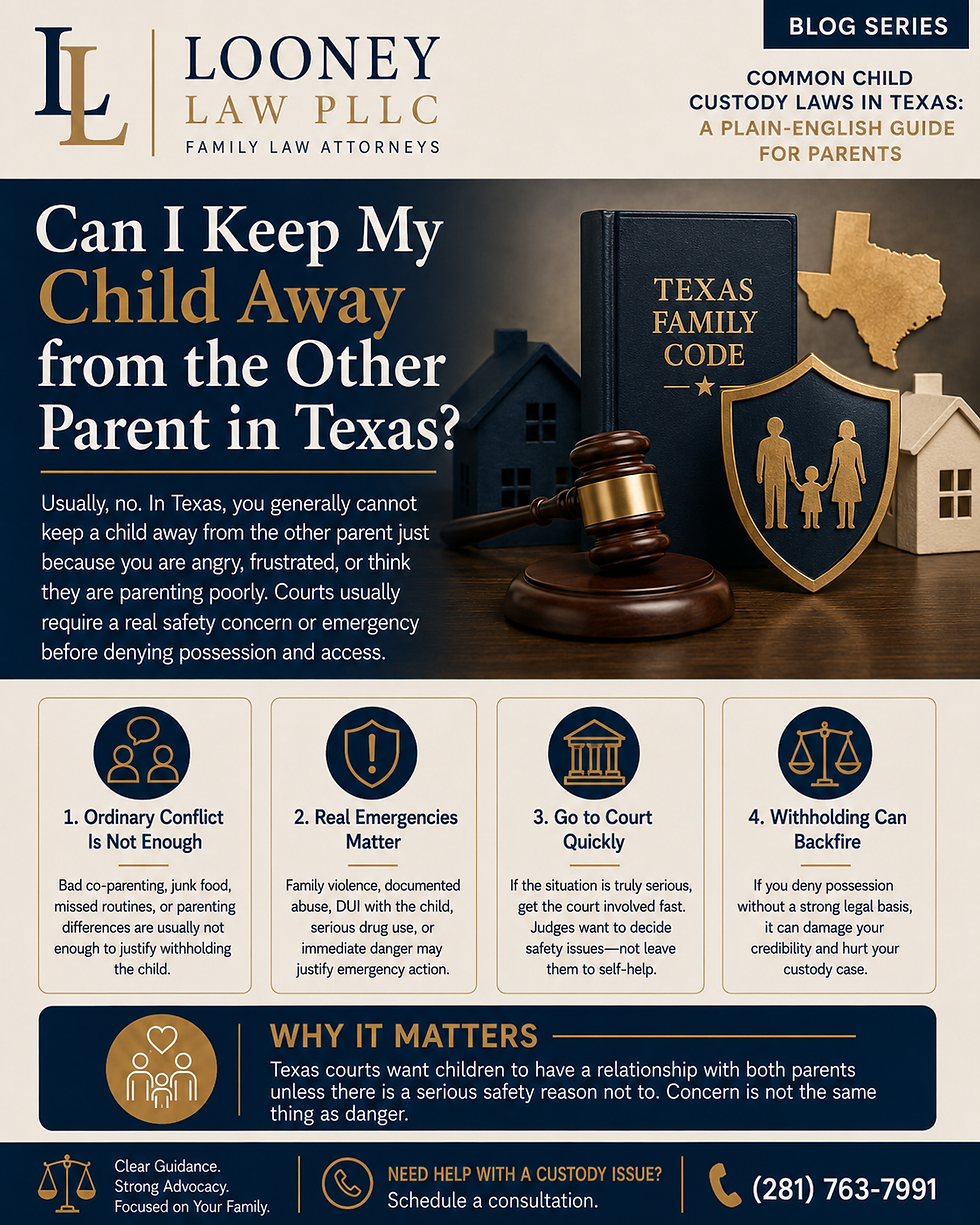
7. Can I Keep My Child Away from the Other Parent in Texas?: Bad parenting is usually not enough to deny court-ordered possession. Courts generally expect parents to follow the rules except in cases of true emergencies.
8. Does a New Boyfriend, Girlfriend, or Stepparent Matter in a Texas Custody Case?: Courts usually care less about jealousy or discomfort and more about actual risk to the child or a new partner driving the custody fight.
9. The Biggest Mistake Parents Make in Texas Custody Cases: Custody cases are not only about winning today’s hearing. They are about building the co-parenting reality your child will live in for years.


Comments